Showing posts with label culture. Show all posts

Monday, 21 September 2015

Lessons from Birmanie!

They say life is not about the number of breaths we take, rather than the moments which take your breath away. And I’ve been more than lucky in that aspect to have had the opportunity to visit Myanmar (erstwhile Burma) for its magnificent landscapes, people beyond the definition of hospitable, art and architecture to satisfy your senses to no end and smiles and peace to greet you even in the most chaotic pick-up van!

While, soon there will be several posts detailing your journey which started from Mandalay, then a 2-day trek from Kalaw to Inle Lake, followed by 2 days at Inle Lake and the neighbouring regions, moving to Bagan for 2 more days and finally back to Mandalay and the neighbouring ancient cities! 
It sounds too much for just 8 days, and it did stretch us to our physically limits, but if we have to do it again, there’s nothing we would change!

While now I sit in my apartment, on a humid Sunday Bombay evening, I can’t stop thinking of snippets of the Myanmar trip and how much I learnt about history, geography and people in general in just those 8 days!

Lessons from Myanmar:

Smiling is a national mandate!
It is crazy, how can an entire nation always put up a smiling face?! Irrespective of the weather, the hardships in life, the spice in your curry, there is nothing that a smile cannot overcome! One night we reached our hostel post midnight and had to bang on the doors to wake up the owners inside, and wake they did with a resplendent smile! Everywhere we went the one thing common was the innocent smiles that greeted us!

First family we met on our trek to Inle Lake. And it was the first time they were seeing foreigners! So happy to have a polaroid to keep those memories forever!
Babies of Burma! On the trek to Inle Lake
So excited to show off his catch!
History does not define your future
Historically, the capital of Myanmar has mostly circulated between Inwa, Amarapura and Mandalay, the three ancient cities. We happened to visit Inwa on one of the days and unless we had specifically read about it’s royal history, there is pretty much no semblance to an erstwhile royal capital! Just goes on to show how if people don’t move ahead with times and still hold on to their heritage, they will neither belong to the past nor to the present.
Ruins at Inndain
More than a thousand pagodas at the Shwe Inn Thein
Bird's eye view of the Shwe Inn Thein

Indulge in the arts!
Almost everywhere one can see people setting up easels or mixing colours to paint the silhouette of a wooden monastery or the flaming colours of the setting sun or the life story of Buddha! Agreed, a lot of it is turning towards commercial consumption owing to increased tourism, however, it is still heartening to see old men with flowing white beards painting sunsets.
Just another morning at a monastery

Too much beauty in the same frame!

There is always time for football!
Footballs here are not what one is used to seeing, the colourful patches on a bouncy big ball. Instead it is fashioned out of bamboo (called a chemlo) and is considerably tinier but still clearly affords the same amount of fun to kids and adults alike. On most corners and alleys it’s not a rare sight to see young monks, with their maroon drapes tied around their waists running after the chemlo.
Chemlo is always a good idea!
At any time of the day!
With anyone!

Mass tourism is fast approaching!
Myanmar saw about 2 million tourists in 2013. Compare this to the 20 million that its neighbour Thailand saw in the same time. While in major tourist spots like Bagan you can see taxi drivers approaching the bus even before it has stopped at the station, at others like Manadalay (surprisingly) most locals just leave you alone as you walk about its crowded streets. While Myanmar is still one of the most pristine and untouched countries in south East Asia, it doesn’t seem like it will remain so for a very long time. It is up to people like us, who while should visit the country and savour its beauty and hospitality in all its glory, but also do it in a manner most responsible. Let’s not make it another Thailand.


Friday, 10 July 2015

Jhapan Mela : Of Cobras , Vipers and their Charmers

We live in a big country. A big, strange and diverse country. Rituals, landscapes, clothing, food, languages keep changing every few hundred kilometers. There is so much to know, so much to see and learn just within the geographical confines of our own country.

So when I heard about the Jhapan Mela, literally the festival of snakes and snake charmers I couldnt be more intrigued especially now knowing that it is celebrated in the same village that some of my relatives are from! Another example of how diverse our culture is, and how much there is to see for all of us, even for the most seasoned traveler!

Below is the article I wrote for Bizarre Culture on the Jhapan Mela.

Bishnupur. 140 odd kilometres from Calcutta. Known to have the highest number of historic temples in West Bengal, mostly made of terracotta. And yet another seemingly nondescript town in a country that is marked by one every hundred kilometres or so.

But with August and the post monsoon lushness and hopes of a good harvest, comes one of the most intriguing festivals celebrated in India, the Jhapan Mela.

On the last day of the Sharavana month of the Bengali calendar, scores of snake charmers gather to worship Manasa Devi, the serpent deity. Members of the Rajbongshi tribe appear with their small bamboo baskets with snakes to honour the fierce Goddess. Many gather to seek her blessings for a good harvest, fertility, prosperity and protection against diseases.  Though throughout the festival one may not actually see idols of the deity, instead followers worship trees, rocks and other aspects of nature. In fact most of the Manasa devi worshipping revolves around being one with nature.

While as per one school of thought, the word Jhapan seemed to have originated from the Bengali word Jhapi, meaning the bamboo basket in which the snake charmers (called the Jhapanias) keep their snakes, as per another school of thought Jhapan literally means a large stage erected to exhibit tricks with snakes.

The festival is celebrated with much fanfare, and for the Jhapanias it is a day to earn the extra income in an otherwise penury ridden life. Snake charming, like most traditional occupations in India have been carried on for generations now. Earlier the snake charmers had a profitable business owing to the demand for venom to be used to treat snake bites. This has now been replaced by synthetic venom being used by the government. Apart from this, with the Wildlife Protection Act making it a crime to own wild animals and use them for personal or commercial profit has further pushed these snake charmers with no alternate source of income into further destitution. Adding to it, in the recent years, the mela has seen a rise in Bangladeshi snake charmers participating as well, thus further reducing earning opportunities. As a result, for a greater part of the year one can mostly see these charmers proving a hit with tourists and cajoling them into taking pictures for a few extra rupees, and living true to the image of India still being a land of snake charmers!

However, for that one day in August, these charmers and their cobras, vipers, pythons take the centre stage as the rest of the public swoons in religious revelry.

Tuesday, 14 April 2015

Have you done the Diu??

“People seem to think embracing life means to jump off cliffs and kiss strangers. Maybe it’s just slowly learning to love yourself.”

Move over Gokarna, make way for the newest kid on the block – DIU!! With pristine beaches, old churches and forts, quaint Portuguese houses, caves and reefs and cheap alcohol supply next to Gujarat, Diu fulfils every requirement on the checklist to the become the next beach-hot spot-getaway (though I pray with all my heart and soul that it does not, just to maintain this very same sanctity)!!

So firstly, one must be warned that reaching Diu is not the easiest task ever. Redbus said the journey will take 18 hours from Mumbai, but after a few helpings of dhokla and thepla, that creeps to a good 22 hours. Yes close to a day in a bus with Govinda movies on repeat, so one can well imagine how beautiful Diu must have been to be worth it!

The first thing that strikes you is how clean the place is! You’ve got to give it to a Union Territory for such brilliant development and spic and span maintenance and a fabulously shot video to show the world the same. (Watch it here in case you still haven’t). The roads even have a separate path for cyclists!! *chuckles*

So we stayed at the Hoka Beach Resort, on Nagoa beach. Named after the Hoka trees on the beach (apparently the only place in India where these trees are found), the resort is cute, extremely hospitable, the staff a tad too slow in the kitchen but they make it up in their kindness.


First up was the Diu Fort. Built by the Portuguese in 1535, the fort was strengthened over the years till 1961 (which is also the longest period of colonial rule anywhere in the world!) Located at the southern tip of Gujarat at the mouth of the gulf of Khambat, the fort also has a large light house. It takes a good couple of hours to peacefully unravel all the gateways and arches and revel in the magnificent views of the sea.  Around the Fort area is the main city, and barring the heat at this time of the year it is a pleasure to walk around the narrow, albeit well-maintained roads, speak to the locals, sit in one of the several churches, or just sit by the dock and watch the ferries come and go.
View from the lighthouse, Diu Fort
Lighthouse, Diu Fort
Colourful houses in the city
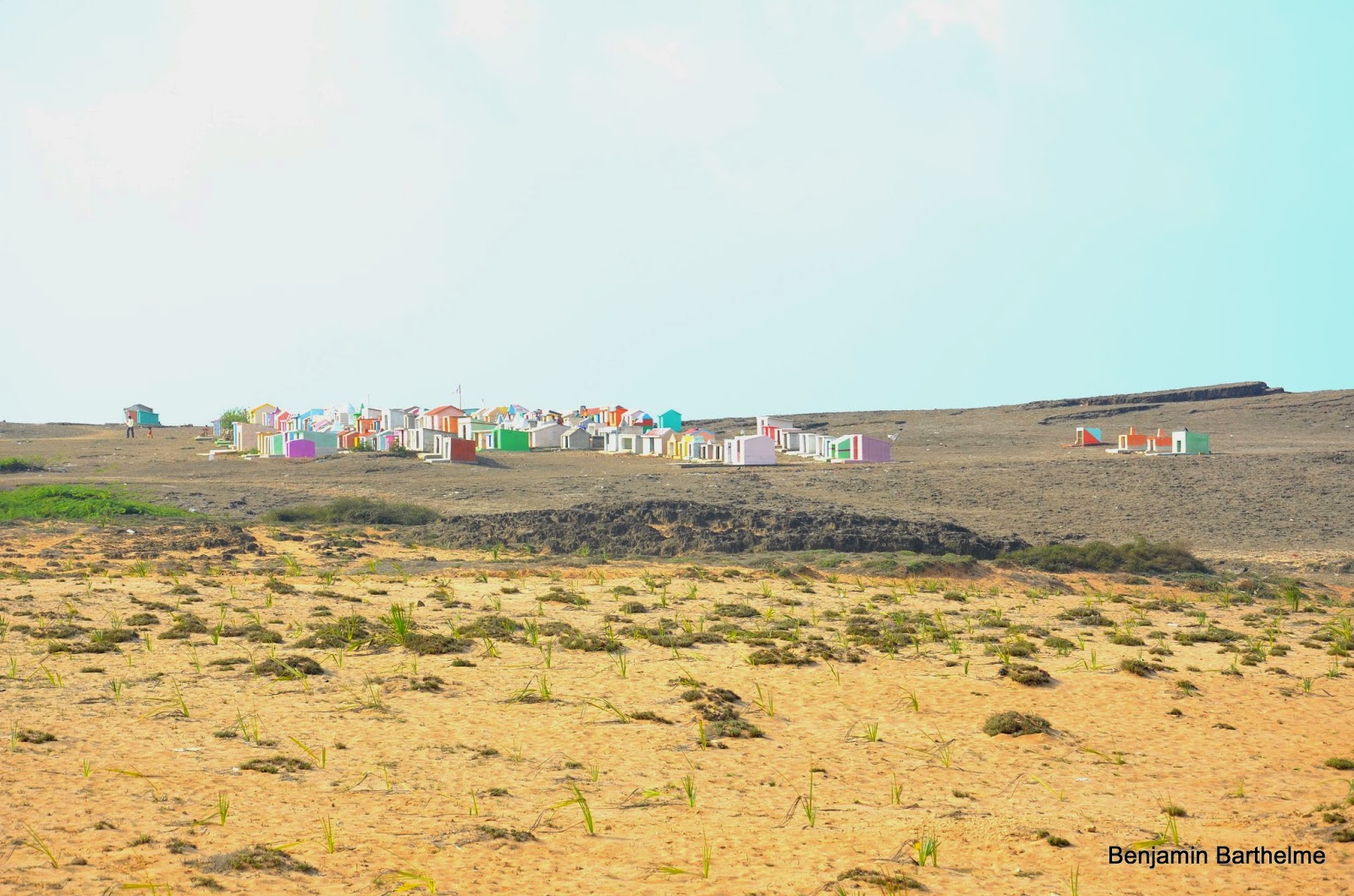
A few kilometres away to the south is the Gangeshwar temple. The Shiva temple has 5 shivalingas, said to have been constructed by the 5 Pandavas. Once a cave temple, now the shivalings lie open to the crashing of the waves and are completely submerged during high tides. The coast here is extremely jagged, in fact the beach is nothing but walking on reefs and hence not very tourist friendly and that’s what adds to the charm. With a few solitary benches placed across the entire stretch, one can just sit and hear the waves crashing and be at peace! Close by are the two “dakhmas” or Towers of Silence, a memorial for the undying spirit of the ancestors of the Parsi community.
Nagoa beach, is by far the most famous beach in Diu and rightly so. With clear waters (and water sports), lined by swaying Hoka trees, and reefs at one end, the beach, when not crowded can be a solace for many.

Near Gangeshwar Temple

Nagoa Beach
For our second day we decided to cycle the entire perimeter of Diu (at least 25km) and even though our butts were not very pleased post the effort, our senses and souls will forever be indebted!

There are hardly any places to rent a cycle from in Diu, its mostly motorbikes and scooty’s. We found our saviour in Safar Bike Rental (thanks Ixigo!). Starting from Diu city, we cycled through the narrow lanes to look for the Nagar Sheth Haveli, an old mansion, now a tourist attraction, done up in some of the most psychedelic colours! A few more kilometres took us to Naida caves. Enough cannot be said to describe the magnificence of these caves. Drama at it’s best. Apparently created after the Portuguese hacked away building material, with crevices and unfinished steps, beams of sunlight interspersed with darkness, dead leaves and dangling roots, the caves are a must visit for anyone in Diu!

Colourful Nagar Sheth Haveli
Naida Caves
More Naida caves

Near the fishing village
And finally, the last leg of our missive bike ride ended at the Gomtimata beach. Not a lot of people 
go there and it isn’t a beach in the usual sense (less sand, more reefs and cliffs) and yet again this only adds to the unbridled charm.


Near Gomtimata beach
All I can say is, we found our Island of Calm, and so must you!

Monday, 13 April 2015

The Rajasthan Odyssey: Solo Indian Woman Travel V4.0


"Had I not created my own world, I would have certainly died in other people's" ~ Anais Nin

Last month I quit my job in Bangalore. No, this is not the beginning of another “How I quit my job to travel the world” blog. I quit my job and now I have moved on to another in Mumbai!
Anyway, the job switch left me with a couple of days in the middle; all to myself and then again the travel bug started itching my insides. And this time I decided on a royalty laden odyssey in Rajasthan.

Being one of the most popular tourist destinations in India, much has already been said and written about Rajasthan, however much still needs to be explored and maybe the same old needs to be explored with a new eye, as I did in my week long stay there.

My journey began from Jaipur, weaved through Udaipur and Kumbalgarh and culminated in Jodhpur and some of most memorable moments are:
1. Visit Nahargarh Fort , Jaipur
Built by Maharaja Sawai Jai Singh II in 1734, the fort was meant to serve as a royal retreat. Standing on the edge of the Aravalli Hills, the fort offers magnificent views of Jaipur city. Along with Amer Fort and Jaigarh Fort, it forms a strong defence ring for the city.
However, make sure to have proper planning while visiting the fort. While buses take you all the way to the entrance of Amer Fort, they drop you around 5km away from Nahargarh. And with the heat, dust, steep climb and poorly functioning lungs, the only way to go up would be to hitchhike like I did if you don’t plan for your own transport! But the view from the top is well worth the hassle!
Also rumour has it that Rang De Basanti was shot here!
Amer Fort
One of the many sights at Amer
View from Amer Fort
                                      
View from Nahargarh Fort
Hawa Mahal, Jaipur
2. Stay at Zostel Udaipur (and also the other Zostels)
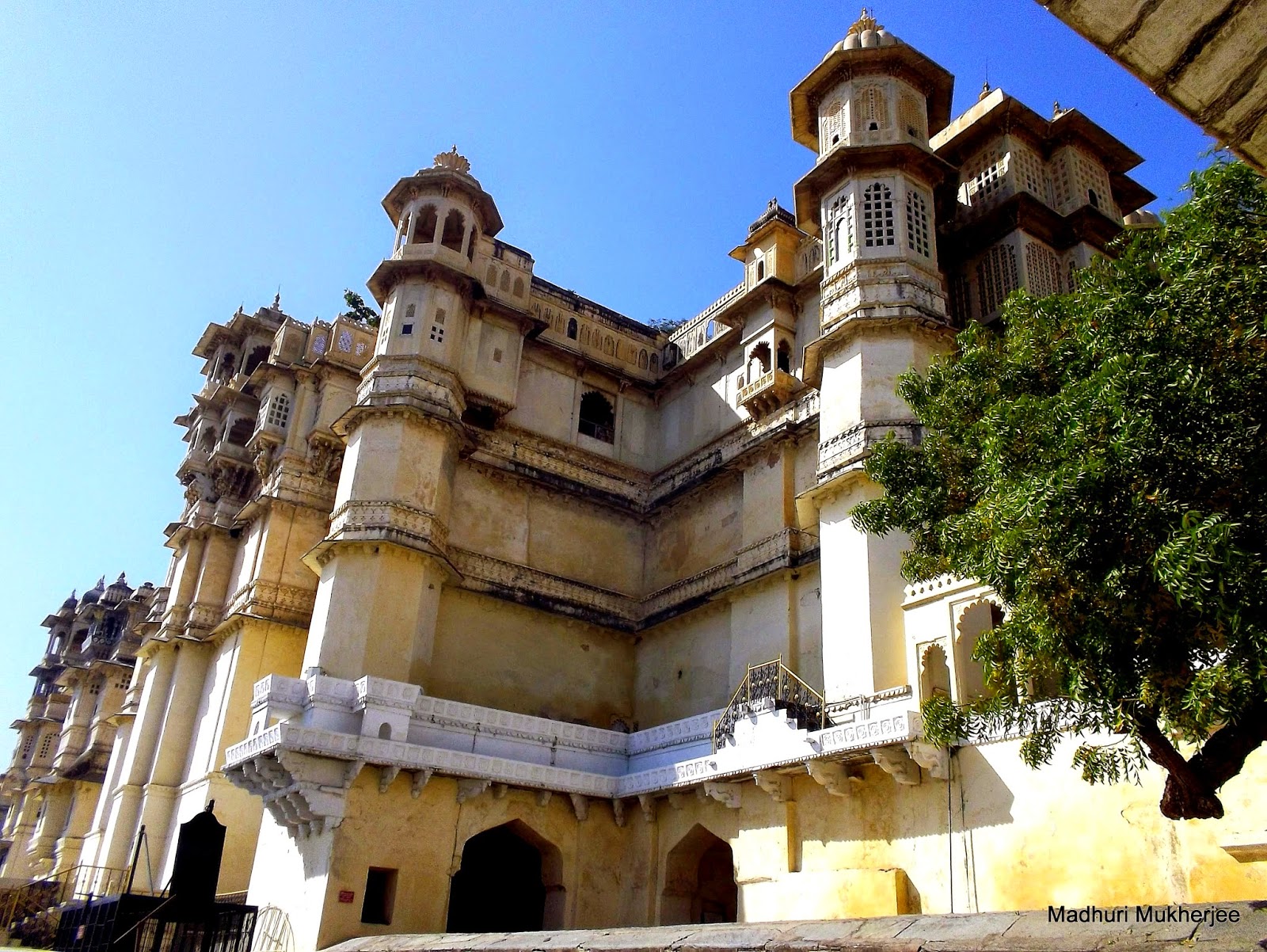
Udaipur is definitely one of the prettiest cities in Udaipur. And the beauty quotient increases a few notches when you’re staying at Zostel Udaipur! What can be better than waking up, pulling the curtains, only to see the sun rising and illuminating the city palace! Yep, all of this from your bunk bed! You have a worthy Instagram shot at 7am!
Another nice part about Zostel are the people! The managers in all of them are super friendly and helpful and during your stay you’ll end up meeting a wide variety of people which will only add to the deliciousness of your travels!

Entrance to the City Palace, Udaipur


3. Go for a cultural show at Bagore ki Haveli
Just in case the ghats, the city palace, Lake Pichola, the tiny shops selling silver jewellery weren’t enough to capture your heart, go for a cultural show in Bagore ki Haveli. These shows are organized every night and display the varied cultural heritage of Rajasthan. From Chhari dance (ladies dancing with pots balanced on their heads lit with fire) to Bhavai Dance (at least a dozen pots balanced on the heads) and dancing on broken glass, and puppet shows, this one hour is guaranteed to regale you!
Bagore ki Haveli on the ghats of Lake Pichola


4.  Definitely check out Kumbalgarh
Just about a 100km away from Udaipur, yet most people would have never heard about it. The Kumbalgarh fort is a Mewar fort, built on a hilltop which is around 1100m above sea level and has walls extending to around 38km, making it the second longest continuous wall after the Great Wall of China. From the top of the palace one can see kilometres into the Aravalli range.

Walls of the Kumbalgarh Fort


5. Only travel in local buses
Needless to say some of the best experiences that one can have is on local transport and Rajasthan is no less. With a landscape so dry, arid and barren, the colourfully dressed locals thronging all buses could not have provided starker contrasts! Also, these are the cheapest and some of the most entertaining ways to travel.

6. Walk up to Mehrangarh Fort

Finally, in Jodhpur, the most famous place of visit is the Mehrangarh Fort and it is worthy of that status. While visiting the fort, instead of driving all the way up to the entrance, it is better to go via the Clock Tower and actually climb up an extremely steep path of close to 2km. The path meanders through tiny houses, all painted in bright blue shades and on the way you’ll mostly encounter curious kids and happy go lucky goats!

Mighty Mehrangarh Fort


View of Mehrangarh Fort from Jaswant Thada
Jaswant Thada
                                                  
Mandor Garden
Umaid Bhavan Palace
Though these for me were some of the memorable moments, but my trip was made with the countless hours of waiting at bus-stops and train stations, of meeting warm strangers and striking up conversations, of watching sunsets and feeling lucky.