Showing posts with label beach. Show all posts

Wednesday, 26 August 2015

Saving the Olive Ridleys, one shore at a time

The Olive Ridley sea turtle or the Pacific Ridley sea turtle is considered to be the smallest and the most abundant of all sea turtles in the world. Yet in a single generation (20 years) their population has declined drastically from more than 10 million in the pre-mass extinction era to about 800,000 as per a recent count.

In the midst of this gloom there is still hope. A tiny village in Maharashtra, which doesn’t even have 5 full sentences as description on Wikipedia, has been working with local NGOs for over a decade now towards conservation of these endangered species.

Velas is a small village in the Ratnagiri district of Maharashtra and is about an 8 hour drive from Mumbai. A decade ago the villagers were concerned about the Olive Ridleys to be able to steal the eggs once laid for consumption or for sale and to hunt the female turtles when they came on shore to breed for the meat or again for sale. However, that was before they joined hands with Sayhadri Nisarg Mitra, an organization which works with these same villagers now towards massive conservation efforts.

Over the past decade, not only have they successfully managed to change the age old habits by making villagers protect the eggs instead of stealing them, they have also helped the residents tap into an additional source of income and put this nondescript village on the tourist map for the turtle breeding months. And this is without any institutional support or a conducive ecosystem for wildlife conservation.

Come November, the female turtles swim in hordes to these shores to lay their eggs in batches of 3 to 4 where each batch consists of 100-150 eggs. It might seem a lot, however the survival rate of these turtles is only 1 in 1000. Thus, only a handful of the turtles hatched from these eggs reach adulthood and the females, it is said return to the same shores to lay eggs where they were born; thus, travelling distances across several hundreds of miles to complete the circle of life.

The eggs once laid, are pretty much left on their own to figure out their way in this cruel world. The members of Sayhadri Nisarg Mitra along with volunteers from the village transfer these batches of eggs to hatcheries to protect them from dogs and other animals. These hatcheries, though are man-made, but have to replicate the conditions created by the female turtle while she laid them. This means, the depth, the temperature of the sand and the moisture needs to be replicated. In fact the difference in these factors not only impacts the rate of the eggs hatching, but also determines the gender of the new born turtles.

After an incubation period of up to 3 months, the eggs hatch. And there can be no better words to describe the scene, other than it is what a miracle looks like. In this crazy race of conquering the world, we tend to overlook the intricate designs nature has, and how everything takes care of itself, as long as we do not poke our annoying human noses. These little hatchlings, with no motherly support around, barely with any sense of sight, only rely on their intuition as they move together towards the sea using their miniscule flippers. Majority of them do not survive even the first few kilometres into their journey of life. Several die over the years if not due to natural causes, then due to human greed. 

For the few that do survive, return to their shore of birth to start a new cycle.

On an average a female turtle reaches maturity and starts laying eggs in 20 years. It’s only a couple of years of wait to see if the efforts of this tiny village and Sayhadri Nisarg Mitra have been successful. And if out of the batch of turtles they released more than a decade ago, return to pay them a visit.
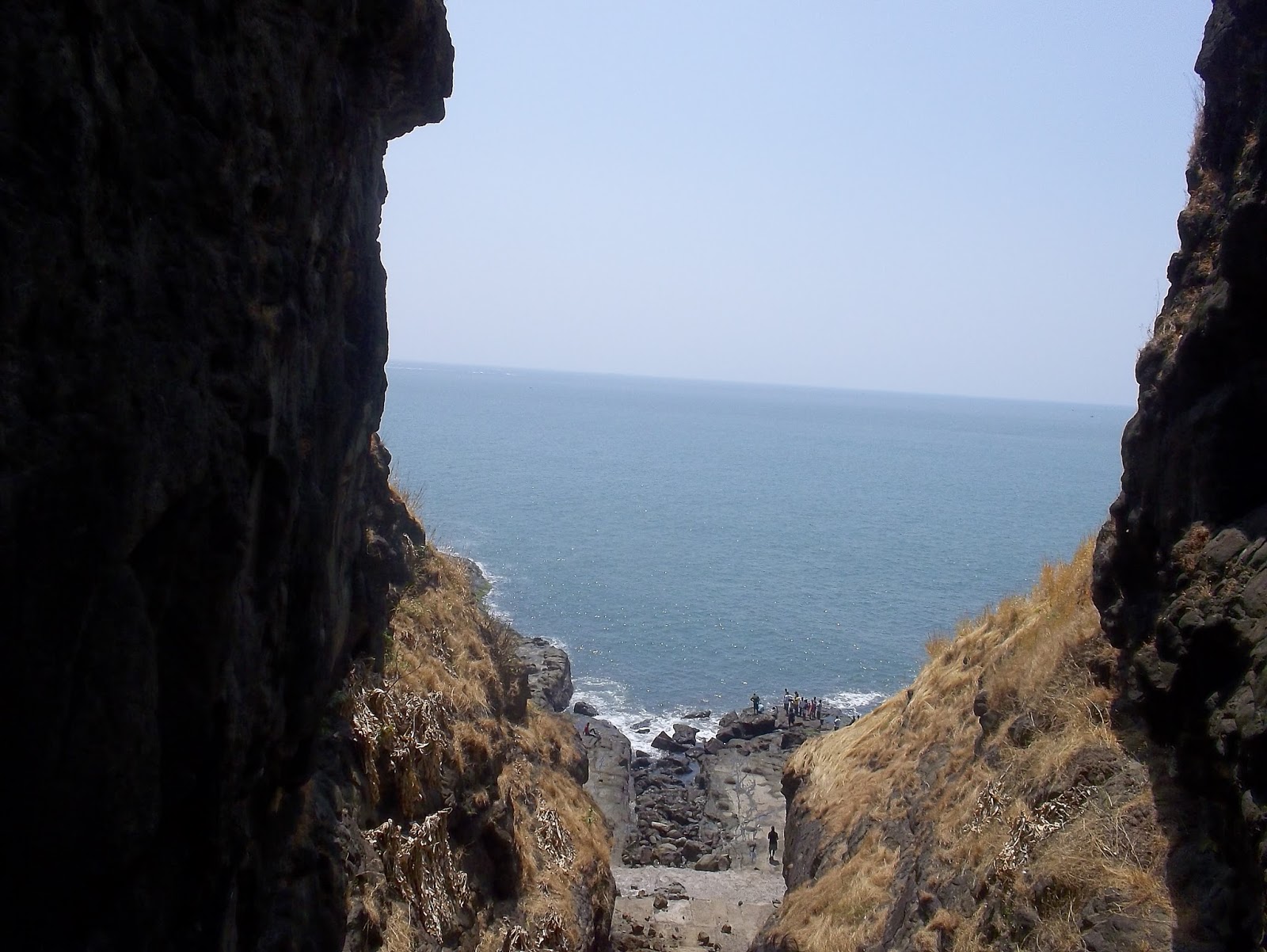

 
Entrance to Harihareshwar
Sunset at Velas
Velas Beach

Tuesday, 9 June 2015

Mornings in Manori

How would you feel when a gust of wind brings forth pomphrets and shrimps? Or walking down the road your eyes catch fish hanging down branches of withered trees? No, you won’t feel like a part of a sci-fi drama, you’d feel what any random day in Manori feels like.

Though it’s just an hour’s drive from Mumbai, or even closer if you take the jetty from Marwe or Gorai, but Manori feels like its nestled in some other era of technological advancement or consumerism, or lack of the thereof. The town is divided mainly into the koliwada or the koli village and the rest. For most people its best known attraction is the water park, Essel World. However, the best way to start off would be a walk through the koliwada. Walking down the narrow alleys, you’d have to squint your eyes to confirm if those are dead leaves heaped up outside every house or remains of shrimps and fish. Every household is engaged in the same activity throughout the morning. Men get the fresh morning catch, the women settle down to separating the fish and put them outside for drying, and some women busy collecting the fish and seafood that has been drying for a while. The whole village seems like an assembly line with the usual cow or kids playing with bicycle tires thrown in!

The village is located right on the Manori beach, which again is a little more of a safe haven from hordes of tourists as compared to the neighbouring Gorai beach. Though the water isn’t the clearest for a quick dip or even to get your feet wet, but there’s something about the whole juxtaposition of dogs sunbathing, carts of shaved ice and families bathing their horses in the sea, that makes the whole setting so charming and quaint and pleasing to the senses.

While on weekends it would be next to impossible to get food at any of the few resorts around, unless you manage to befriend one of the many 20-membered families out there on a picnic. But there are several tiny restaurants with basic fare, enough to satiate the lunch hunger pangs.

While on one end of the town is the koliwadi, the other end if occupied by the complete opposite of what koliwadi stands for. The other end has what they proclaim the largest water park in Asia, Essel World and Water Kingdom. And right next to it is the World Vipassana Centre Pagoda created a couple of years ago. Why would someone create a place of worship next to one of the noisiest places that there can be beats me! Its been decreed as sacred land, and ,men and women are asked to not stay very close to each other and try and immerse themselves into chanting, whereas a few hundred feet away men and women get wet together and howl and scream with adrenaline rush!

Well yeah, as if we did not know already, our country the land of paradoxes!

But for a quiet Sunday morning by the beach, do come to Manori and hang out at the fishermens’ village J
Dried fish hanging from trees
Dried fish hanging from clotheslines
More dried fish hanging from more places

World Vipassana Pagoda
Well coz it's sacred land they say!
At the entrance of the Pagoda


Tuesday, 14 April 2015

Have you done the Diu??

“People seem to think embracing life means to jump off cliffs and kiss strangers. Maybe it’s just slowly learning to love yourself.”

Move over Gokarna, make way for the newest kid on the block – DIU!! With pristine beaches, old churches and forts, quaint Portuguese houses, caves and reefs and cheap alcohol supply next to Gujarat, Diu fulfils every requirement on the checklist to the become the next beach-hot spot-getaway (though I pray with all my heart and soul that it does not, just to maintain this very same sanctity)!!

So firstly, one must be warned that reaching Diu is not the easiest task ever. Redbus said the journey will take 18 hours from Mumbai, but after a few helpings of dhokla and thepla, that creeps to a good 22 hours. Yes close to a day in a bus with Govinda movies on repeat, so one can well imagine how beautiful Diu must have been to be worth it!

The first thing that strikes you is how clean the place is! You’ve got to give it to a Union Territory for such brilliant development and spic and span maintenance and a fabulously shot video to show the world the same. (Watch it here in case you still haven’t). The roads even have a separate path for cyclists!! *chuckles*

So we stayed at the Hoka Beach Resort, on Nagoa beach. Named after the Hoka trees on the beach (apparently the only place in India where these trees are found), the resort is cute, extremely hospitable, the staff a tad too slow in the kitchen but they make it up in their kindness.


First up was the Diu Fort. Built by the Portuguese in 1535, the fort was strengthened over the years till 1961 (which is also the longest period of colonial rule anywhere in the world!) Located at the southern tip of Gujarat at the mouth of the gulf of Khambat, the fort also has a large light house. It takes a good couple of hours to peacefully unravel all the gateways and arches and revel in the magnificent views of the sea.  Around the Fort area is the main city, and barring the heat at this time of the year it is a pleasure to walk around the narrow, albeit well-maintained roads, speak to the locals, sit in one of the several churches, or just sit by the dock and watch the ferries come and go.
View from the lighthouse, Diu Fort
Lighthouse, Diu Fort
Colourful houses in the city
A few kilometres away to the south is the Gangeshwar temple. The Shiva temple has 5 shivalingas, said to have been constructed by the 5 Pandavas. Once a cave temple, now the shivalings lie open to the crashing of the waves and are completely submerged during high tides. The coast here is extremely jagged, in fact the beach is nothing but walking on reefs and hence not very tourist friendly and that’s what adds to the charm. With a few solitary benches placed across the entire stretch, one can just sit and hear the waves crashing and be at peace! Close by are the two “dakhmas” or Towers of Silence, a memorial for the undying spirit of the ancestors of the Parsi community.
Nagoa beach, is by far the most famous beach in Diu and rightly so. With clear waters (and water sports), lined by swaying Hoka trees, and reefs at one end, the beach, when not crowded can be a solace for many.

Near Gangeshwar Temple

Nagoa Beach
For our second day we decided to cycle the entire perimeter of Diu (at least 25km) and even though our butts were not very pleased post the effort, our senses and souls will forever be indebted!

There are hardly any places to rent a cycle from in Diu, its mostly motorbikes and scooty’s. We found our saviour in Safar Bike Rental (thanks Ixigo!). Starting from Diu city, we cycled through the narrow lanes to look for the Nagar Sheth Haveli, an old mansion, now a tourist attraction, done up in some of the most psychedelic colours! A few more kilometres took us to Naida caves. Enough cannot be said to describe the magnificence of these caves. Drama at it’s best. Apparently created after the Portuguese hacked away building material, with crevices and unfinished steps, beams of sunlight interspersed with darkness, dead leaves and dangling roots, the caves are a must visit for anyone in Diu!

Colourful Nagar Sheth Haveli
Naida Caves
More Naida caves

Near the fishing village
And finally, the last leg of our missive bike ride ended at the Gomtimata beach. Not a lot of people 
go there and it isn’t a beach in the usual sense (less sand, more reefs and cliffs) and yet again this only adds to the unbridled charm.


Near Gomtimata beach
All I can say is, we found our Island of Calm, and so must you!

Monday, 8 December 2014

Eat. Pray. Love. At Gokarna.

Go
Fly
Roam
Travel
Voyage
Explore
Journey
Discover
Adventure

With my daily humdrum life in Bangalore, the closest I could come to nirvana, was Gokarna. A small sleepy temple town on the Western coast of India, is by far my best bet to go to if one wants to unwind in every sense of the word. The place is so relaxed that is will make you want to shut your brain down even if you don’t want to! With this massively enticing thought in mind we boarded our night bus from Bangalore to Gokarna.

Usual sights at Kudle beach
Now Gokarna is known for its religious attractions (which we decided to put for the later part of the trip) and its multitude of beaches. The most famous one of course is the Om Beach, which is well as the name suggests shaped like an Om! Being the most famous, it also is the most crowded of them all. Especially if you end up going on a weekend (which most people do) the beach is thronged by families and kids running all over and ladies washing their scarves, sarees et all in the waters.


So for a quite stay the best bet would be to go to Kudle beach. It is a little more deserted and quiet and mostly has foreign tourists who don’t want to give a damn about the world! You can wake up early in the morning, chill on the beach and do some yoga with cows and dogs for company, get some delicious omelettes and pancakes at one of the few shacks for breakfast and repeat this for as many days as you can!

The shame is however, that not many people go to any of the other beaches beyond Om and Kudle. Om is the most accessible and as we move further to Kudle, Half Moon and the Paradise beaches, the ease of accessibility reduces tremendously.
For Kudle we had to do a small trek down a hill, but the most fun was the Half Moon beach trek. It’s through a jungle, over a hill, the path is barely two feet wide (I’d wonder if you could even call it a path) and it precariously overlooks the steep fall to the sea. Definitely not the best way to take if you’re scared of heights or water or both! The only other way to access the other beaches is by boats which again are not all that frequent.
But that trek which brings your heart to your mouth is well worth it! Imagine after that freaky trek arriving at a beach where you are the only person till as far as the eyes can see! These beaches I had heard were secluded but no one ever mentioned that secluded meant your own private beach with no one else around!!
 
The "path" to Half Moon beach
The seclusion is worth the trek


So next time your souls yearn for peace and to forget the world, without thinking much pack those bags to Gokarna!


Saturday, 18 October 2014

Bidding Adieu to Summer, Bilbao style!

“Bizarre travel plans are dancing lessons from God – Kurt Vonnegut”

This September I went back again to France (in an attempt to make this an annual thing, and make it sound all fancy!), and luckily for me, this year, the (European) weather Gods were in a much better mood! The 10 days that i was there i soaked up more sunshine than I actually ever have in Bangalore in the last 1.5 years!!

Since last year I had managed to cover a lot of places in France, so this year I decided to drive down further and visit the areas of the Basque Country which lie in Spain (obviously it’s a blessing when you have an adoring boyfriend willing to drive you down to wherever you want!)

Our first stop was Hondarribia.

Hondarribia, which in Basque means sand fort is a quaint border town located on the west shore of the Bidasoa river. The first thing that hits you when you step foot on here, is how different the pace of life is from France which is just a couple of kilometres away! Almost felt that the car ride was more than a ride, it was a journey back in time (or forward?!), to a space where good food, good ambience, walking by the beach, watching pristine white sailboats and colourful yachts on the deep blue waters, meandering aimlessly on cobbled streets define a way of life instead of the madness that consumes us as we run every morning from home to the gym to work to the local bar to back to bed. It was a Wednesday and we only planned to stop for a few quick hours to walk around the town, but it almost felt like in the middle of a festive season with kids running all over the place, people old and young sipping on wine and gulping down beer on the tiny bar stools that pockmarked every walkway and lively music floating through the air.

Apart from chilling, soaking in the good life and leaving all worries behind, the other things to do here would be to relax some more (!!) and maybe to visit the Ermita de Guadalupe, a small church situated on the hill top.

From postcard to reality!

Cobbled pathways of Hondarribia
Next up was the city, which is now a part of my ‘favourite cities’ list; Bilbao. Before coming, the usual things one would have heard about Bilbao were..umm nothing more than a small gritty industrial town, but it is magnificently surprising to see how culturally oriented the city has become with marvels of art to stumble upon at every second turn you take!

First up of course is the most famous attraction – the Guggenheim Museum. Designed by Frank Gehry, the building in itself is an architectural masterpiece. And even before you can enter the museum, you are hit by a blast of art by from the several installations around museum premises.


Installations outside the Guggenheim Museum

That moment of pride - Anish Kapoor at Guggenheim


The Guggenheim is situated right next to Casco Viejo, the old town which is full of charming streets, quaint houses, magnificent churches, boisterous bars, quirky shops and lots of good food!

When in Bilbao, one must try the pinxtos (Basque tapas), and we were just lucky to have landed right in the middle of the pinxto festival! This is when almost every pub (which double up as cafes during the day) serve their specialties and compete with each other to win the best pinxtos award!

Now since Bilbao is a valley town nestled between mountain ranges, it’s a pretty good use of one’s time there to take the funicular as it creaks and moans its way up Mount Arxanda from where one can get spectacular views of the entire city.
At Mount Artxanda

Sunset at Mount Artxanda

Finally on our way back to France, we decided to make on last stop at Donostia- San Sebastian. If ever you have dreamt of what the perfect beach would look like, then Playa de Concha and its extension Playa de Ondarreta would be the epitome of that dream! With the golden sandy beach stretching till the eyes can see, water more blue than you’ve ever witnessed, hundreds of toned bodies soaking up the sun, it is easily one of the best beaches I have ever been to! Walking towards the western part of the beach, you reach Playa de Ondarreta and if the sumptuous beach wasn’t enough to enthrall your senses, then definitely the sculptures embedded in the rocks would. The installations by Eduardo Chillida, create a mystical harmony between human art creations and the creations of nature. 
Playa de Concha

Installations at Playa de Ondarreta


San Sebastian, screams art, culture, history and positivity from every brick! No wonder it has been named as the European Center of Culture for 2016. One can spend hours walking around the old city, savoring the pinxtos followed by the churros, witness wedding celebrations at the Ayuntamiento de San Sebastian, laze around in the courtyard of the Plaza de Constitucion, walk up to the sculpture of Christ as the Good Shepherd or just check out the Aquarium at the end of the pier.
Plaza de Constitucion

It is true that visiting Spain is tantamount to a visit to India, it’s a collection of small nations working together, each with its own distinct art, flavour and culture and yet fusing together so effortlessly. A weekend in the Basque region will most probably be spent OD-ing on art and beauty and letting the smells and tastes overwhelm your senses.


These are not the most advertised European destinations, but by far one of the most beautiful and fulfilling journeys I have taken.